Production Powerhouses Series Q&A: Jeff Schartiger on RBB’s People-First Culture, Flexibility, and High-Mix Manufacturing
In an EMS industry that often emphasizes scale, automation and metrics above all else, RBB is proving that a people-first culture and operational flexibility can be just as powerful.
 RBB is a smaller EMS provider that specializes in high-mix, low-to-medium-volume work for customers who need a partner willing to move heaven and earth to get the job done. The company’s culture emphasizes team member development, open communication and taking on challenges that others might avoid.
We sat down with Jeff Schartiger, operations manager at RBB, to discuss his approach to operational excellence, the limits of automation in high-mix environments and why developing people is the most important thing an operations leader can do.
Q: What separates a good operations leader from a great one?
Schartiger: A great operations leader can look at the numbers; metrics, schedules, daily priorities; but also understands that there are people behind those numbers. That is the most important thing.
You must be able to hold people accountable while still supporting them. I find that people really do want to be held accountable. They want to know where they stand, and they want to do a good job. I’ve never had anyone come to me and say, “Hey, I’m going to mess something up today.” Everyone wants to do a good job. It’s all about supporting them.
It also means talking to people, being out on the floor and having one-on-one conversations. I do that as much as I possibly can. I don’t like being stuck in the office. I do the administrative work, it’s not my favorite thing. I’d rather be with the people, making sure they have the tools and resources they need to be successful. That’s what makes a great operations leader.
Q: Where do you see the most common breakdowns in manufacturing?
Schartiger: I think it’s probably communication and unclear work instructions. I don’t think anybody intentionally does something wrong. Often, it’s because the work instructions weren’t clear, or they didn’t have a resource I could have provided to help them get the job done.
As a contract manufacturer, you never know what RFQs or projects are going to come through the door. Some customers are great at providing clear expectations, BOMs, drawings and everything else. Others may not have everything as well defined. So, it’s really about working with them and making sure our team has what it needs to be successful.
When it comes to communication, we do a great job with our clients. We’ve actually won several awards for it. Of course, there’s always room for improvement. We also do a great job communicating internally, but again, there’s always room to improve.
I always find it interesting to hire new people because they’re excellent auditors for us. They’ll come in and ask why we do something or say, “This doesn’t make sense to me.” It makes you step back and ask, “Okay, why are we doing it this way? Is this the best method?” I love when new people start because it always helps us improve.
Q: What’s your daily approach to staying connected to operations?
 Schartiger: My daily approach is about being visible and letting everybody know I’m here. My office is out on the production floor because that’s where I wanted it. I wanted to be visible to everybody. My door is always open, and I position my desk so I have a clear view of the door and everybody can see me—and see when I’m not here. It’s great.
Sure, it can be stressful at times because it seems like I can never get things done with all the interruptions. But I enjoy that, too. Everybody knows that if I’m here, they can come find me
Obviously, I look at the metrics, KPIs and all of that. I must be aware of everything going on, but I get most of that information from talking to people rather than just looking at data.
I also have quarterly one-on-ones with everyone who reports to me. My calendar is always full. I approach my one-on-ones a little differently. We talk about business needs and what they want, what’s getting in their way that I can help with, and what tools and resources they need. But it’s also a chance for me to get to know them outside of work and ask, “What’s going on in your life?” They get to know more about me that way, too. It’s great to have that relationship.
Q: When things go wrong, what’s your approach to fixing them?
Schartiger: First, we must contain the issue. As soon as I’m notified, we act because we want to protect the customer. That’s always the priority. Then I want to understand why it happened and what’s going on.
I had a conversation with a couple of team members yesterday about some issues. When anything goes wrong, it’s inevitable that somebody will ask, “Who did that?” or want to know who was
responsible. I don’t focus on who did it. I need to know what happened in our processes that allowed it to happen. That’s what’s most important to me because everybody makes mistakes. No one is intentionally trying to make them.
So, I ask: What happened in our process that allowed this to happen? Is there something we can improve, or something that was missed? I look at it as a process problem when something goes wrong. Getting everybody to think that way can be a challenge, but it’s the right approach.
We’re perfectly designed to get the results we’re currently getting. To change those results, you must change the process and how you’re doing things.
Q: Automation is a major topic across the industry. Where does it have the most impact, and where is it overrated?
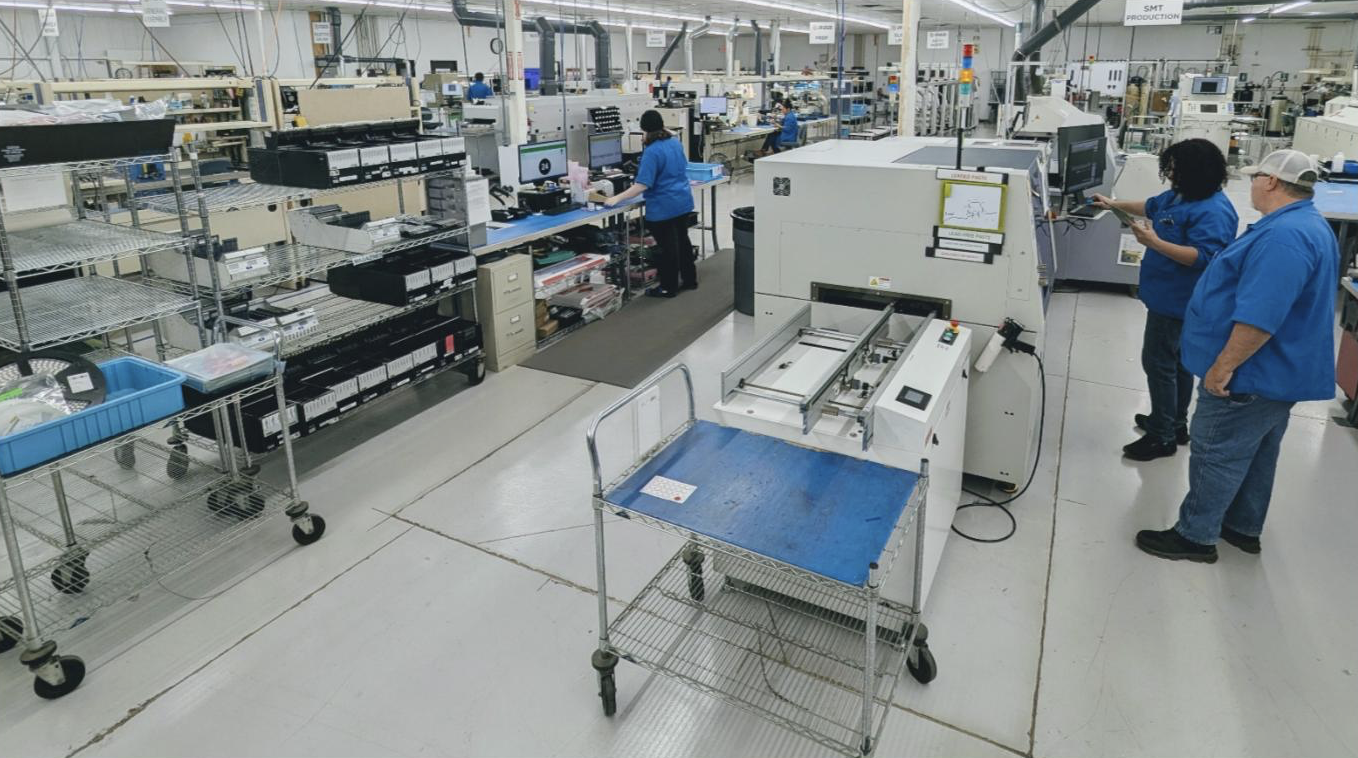
Schartiger: Being a contract manufacturer makes automation a little different because you’re not always working on the same projects. If you have recurring clients and consistent production needs, that’s where automation can really have an impact. It can improve consistency, capacity, traceability, quality and all those things
But we deal with a lot of high-mix, lower-volume work. Flexibility is important for us. Sometimes the smartest solution isn’t automation.
It really depends on the customer and what you’re building. As a contract manufacturer focused on high-mix, lower-volume work, sometimes automation makes sense and sometimes it doesn’t. That’s why I always go to trade shows to see what new technology is available. I look at how it applies to what we do here at RBB and whether it can help us improve.
Q: How do you develop strong teams and future leaders?
Schartiger: We’re really good at that. It’s a big part of our culture. It’s in our DNA to always strive for better. One of our core values is focused on ensuring everybody has that opportunity. We try to hire people who share that mindset and say, “If you want to grow, this is the company for you.”
I like to give people opportunities before they think they’re ready. That might sound a little unusual, but I can point to numerous examples of people I’ve approached about leadership, learning a new skill or taking on something different. They’ll say, “I don’t know if I can do that.” And I’ll say, “Yes, you can. Let’s try it and see what happens.” Then they succeed. It gives them confidence in their abilities. From there, I give them ownership, let them make decisions, help them learn and allow them to make mistakes.
That’s something I learned from our company leadership. I’ve been allowed to learn, understand what didn’t work and move forward. That’s very unique. In all the places I’ve worked, I never had that same opportunity to fail and learn from it. That’s what we do here.
Q: Where does RBB stand out compared to other EMS providers?
Schartiger: I think it’s really flexibility and relationships. If you ask any company, they’ll say it’s about taking care of their customers, and it should be. But I think one of our biggest strengths is flexibility. As a smaller EMS company, we really do strive to move heaven and earth to get clients what they need when they need it. I think that captures everything we do.
We also have a lot of capabilities for a smaller EMS company. We’re not afraid to take on a challenge for a customer, whether it involves a new process, a new piece of equipment or something similar. My approach is, “Let’s figure it out.” I think that’s one of the things that make RBB special.
Q: Continuing to invest in machinery is critical in EMS, but capital is always limited. How do you evaluate when to upgrade equipment versus repair or optimize what you already have, and what metrics or strategic factors drive that decision?
Schartiger: I try to look beyond the price and really understand what the equipment can do for us and how it can serve our clients. As I mentioned before, we’re not afraid to purchase something we haven’t purchased before if it’s needed for a specific client and helps solve their problem.
Obviously, we look at reliability, how much downtime we might experience, what maintenance looks like, the age of the equipment, and the potential for obsolescence. Then we look at how it could increase throughput and improve our operations.
I also look at utilization. How often are we going to use it? Is it something we’ll rely on regularly, or is it going to sit there collecting dust while we focus on something else? It’s about having a long-term strategy, not just investing in the newest piece of equipment because it’s available.
Q: Quality is often called non-negotiable, but production pressure is real. Why is quality the foundation of a high-reliability EMS operation, and how do you build a culture where quality is owned on the floor rather than just inspected in?
Schartiger: For high-reliability products; when you’re talking about defense, aerospace and similar markets; it has to be right. It cannot fail. You must build quality into your processes. A quality issue can affect far more than an individual assembly. It can affect a production line, create a safety concern, or impact the customer. All of that is incredibly important.
I think we do a great job here. Everybody takes ownership of quality. We do have a quality management system that we rely on, but each team member understands from the day they walk in the door that they’re part of that process.
I had some training a couple of weeks ago that focused on quality, and I reiterated that everybody is responsible for it. Anyone, no matter where they work here, can stop the line and say, “I don’t agree with this. Something’s wrong.” They’re not going to get in trouble for speaking up. We need to look at it, assess the situation and understand what’s going on.
Reinforcing that message gives people ownership. You don’t have that division between production and quality, where the two departments are working against each other. We’re all here for the same goal: build it correctly and deliver it to the customer.
Q: After all these years, what still motivates you?
Schartiger: It’s the challenge. I love the challenge. There’s always another problem to solve, another process that can be improved or another person who can be developed. I really enjoy that.
One of my proudest moments is watching people who didn’t think they were ready for the next step grow and succeed. That’s really rewarding to see.
A colleague of mine said it a long time ago, and I will never forget it. He said being in a small business is kind of like building a house that’s always on fire. It sounds terrible, but there’s some truth to it. There’s always something happening, always another challenge. If you enjoy that sort of thing, this is the place for you. If you don’t, it might not be the industry you want to work in. I happen to enjoy it.
I love coming in and not knowing exactly what the day is going to bring or what problems we’ll have the opportunity to solve for our customers next. I think that’s really the best part.